Wisconsin Casino Room: What Is the Minimum Bet?
The minimum bet in a Wisconsin casino room is not a single fixed number — it is a moving floor engineered by table type, tribal compact language, and pit boss discretion, and anyone who tells you otherwise has never actually read a gaming floor layout sheet.
Let me be brutally direct: players walk into Wisconsin tribal properties expecting a clean, posted minimum like a slot machine's denomination, and they get ambushed by a three-tier structure that punishes ignorance. If you do not understand how the minimum is constructed, you will sit down at the wrong table and bleed bankroll on a game whose real cost per hour is triple what you assumed.
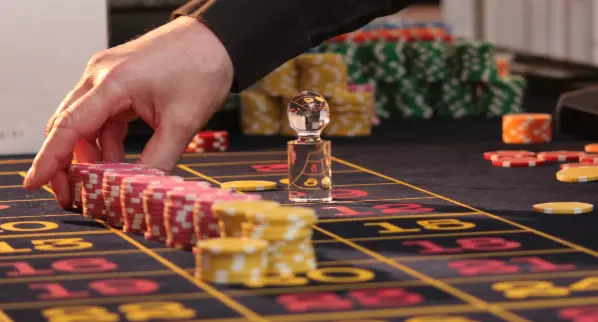
The Real Floor Structure Behind Table Minimums
Wisconsin does not run commercial casinos — every room operates under tribal sovereignty and state compact rules, which means the minimum bet is set at the property level, not the state level. That single fact destroys the fantasy of a uniform statewide number. A blackjack table at one property can post a $5 floor on weekday afternoons and slam it to $25 the moment a bus group walks in. The minimum bet is a live variable, not a printed statute.
Here is the mechanical reality most players never see. The floor manager tracks two numbers: the posted minimum and the effective minimum. The posted minimum is what the felt sign says. The effective minimum is what the dealer actually enforces once a table heats up — and those two numbers can drift apart by 300% inside a single shift. 🎲 If you sit at a table because the sign said $10 and the dealer later refuses your $10 bet, you were reading stale data.
Blackjack, Roulette, and Poker Run Different Minimum Engines
Blackjack in Wisconsin rooms typically floors between $5 and $15 on off-peak hours, climbing to $25 or $50 on weekend nights. Roulette is a different beast entirely — the inside minimum is frequently decoupled from the outside minimum, so a $1 chip on a straight-up number can coexist with a $5 outside minimum on red or black. That split-minimum architecture is where casual players get wrecked without realizing it.
Poker rooms operate on a completely separate logic. Cash game minimums are usually expressed as a blind structure, not a flat bet — a $1/$2 no-limit game has a $2 minimum bring-in in most Wisconsin rooms, but the real cost floor is the table minimum buy-in, often 20 to 100 times the big blind. Do not confuse the two. The Wisconsin casino room minimum for poker is a buy-in threshold, and it is the number that actually governs whether you can sit down at all.

Why the Minimum Is a Profit Engine, Not a Courtesy
Understand the incentive. Every table has a fixed operating cost — dealer wages, surveillance overhead, floor space. The minimum bet exists to guarantee that the theoretical house edge per hour clears that cost. A $5 blackjack table with a 0.5% edge and 60 hands per hour generates roughly $1.50 in expected house revenue per player per hour. That barely covers the dealer. This is why properties aggressively raise minimums the second demand spikes — the floor is a dynamic pricing lever, and you are the demand curve. 💰
Slot floors follow a parallel but distinct rule. The minimum bet there is the denomination — penny machines often require a minimum spin of 30 to 50 credits to activate every payline, which means the "penny" slot has an effective minimum of $0.30 to $0.50 per spin. That is the hidden minimum. Read the payline configuration before you touch the spin button.
How to Read the Actual Minimum Before You Sit
Three checks, in order. First, the felt sign or electronic display — it shows the posted minimum but is frequently stale. Second, ask the dealer directly for the current table minimum and the inside/outside split on roulette. Third, watch one full round and confirm the smallest chip actually accepted. If the dealer waves off a bet at the posted minimum, the effective floor has moved and the sign is lying to you.
Peak-hour windows in Wisconsin rooms — Friday after 6 PM and all day Saturday — are when minimums inflate fastest. If your bankroll only supports a $5 to $10 game, hit the floor before noon or on Tuesday and Wednesday evenings. The minimum bet at off-peak hours is the same game at a fraction of the volatility, and the house edge does not change one decimal point. 🎯
One final mechanical detail that separates sharp players from tourists: the table minimum applies to your total wager per round, not per hand in multi-hand blackjack. Play three hands at a $10 table and you have committed $30, not $10 — and the variance stacks accordingly. That single misread is the most expensive arithmetic error on the Wisconsin gaming floor.